
A step-by-step tutorial on creating the perfect matching bind-off for the longtail cast-on
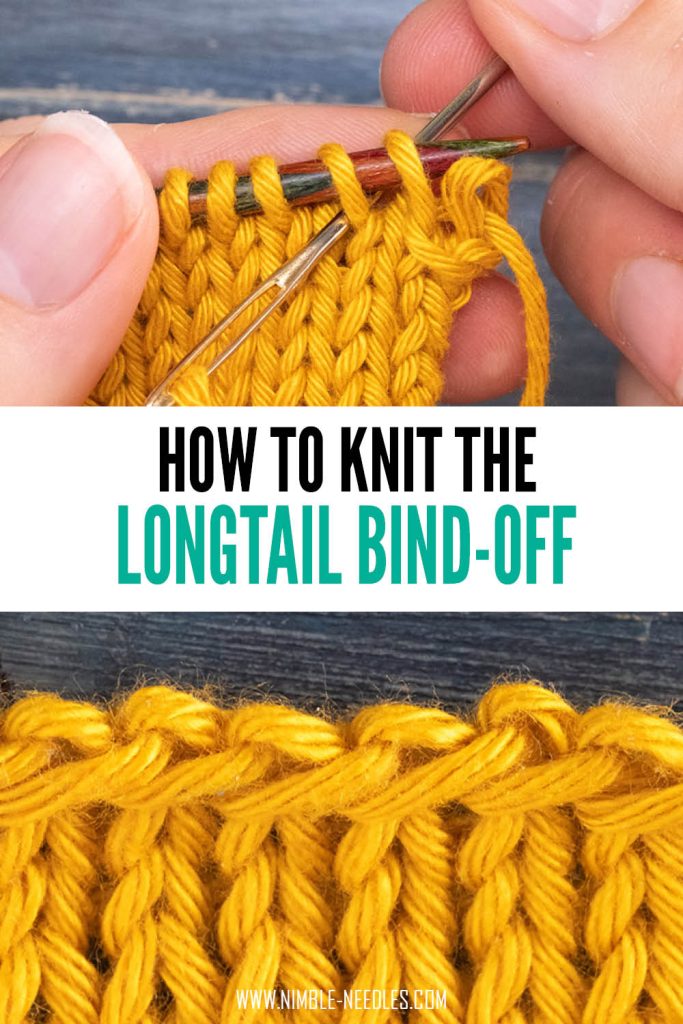
There is one issue that has been confounding more than just a generation of knitters. How can you create a bind-off edge that perfectly mirrors the edge a standard longtail cast-on creates? Very few knitters know that there is actually a corresponding longtail bind-off (sometimes also called half-hitch bind-off).
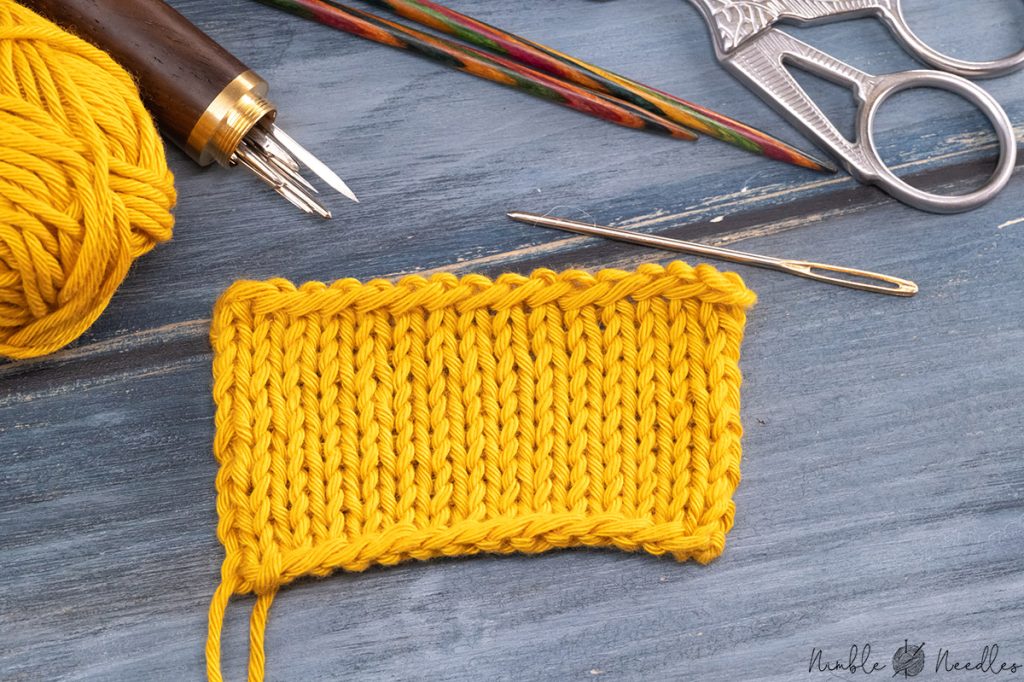
It’s actually remarkably easy once you realize that a longtail cast-on can be deconstructed by doing a single cast-on first, and then working across the next row through the back loop. Maybe this bit is new to you, but you probably will have heard that it creates the first row in the same breath. So, all you have to do is recreate the single cast-on, so a simple line of twisted loops, with your tapestry needle. Here is how.
Note: I earn a small commission for purchases made through links in this article.
Instructions: How to knit the longtail bind-off

To mirror the edge a longtail cast-on creates, you will need a blunt tapestry needle. For a neat finish, try to avoid splitting the stitches as you go and maintain an even tension as you pull tight. It takes a bit of practise to perfectly mirror the tension of the other edge.
Tools
Instructions
- Break the yarn and leave a tail that is roughly 3 times as long as your project is wide. Thread it on a blunt tapestry needle.
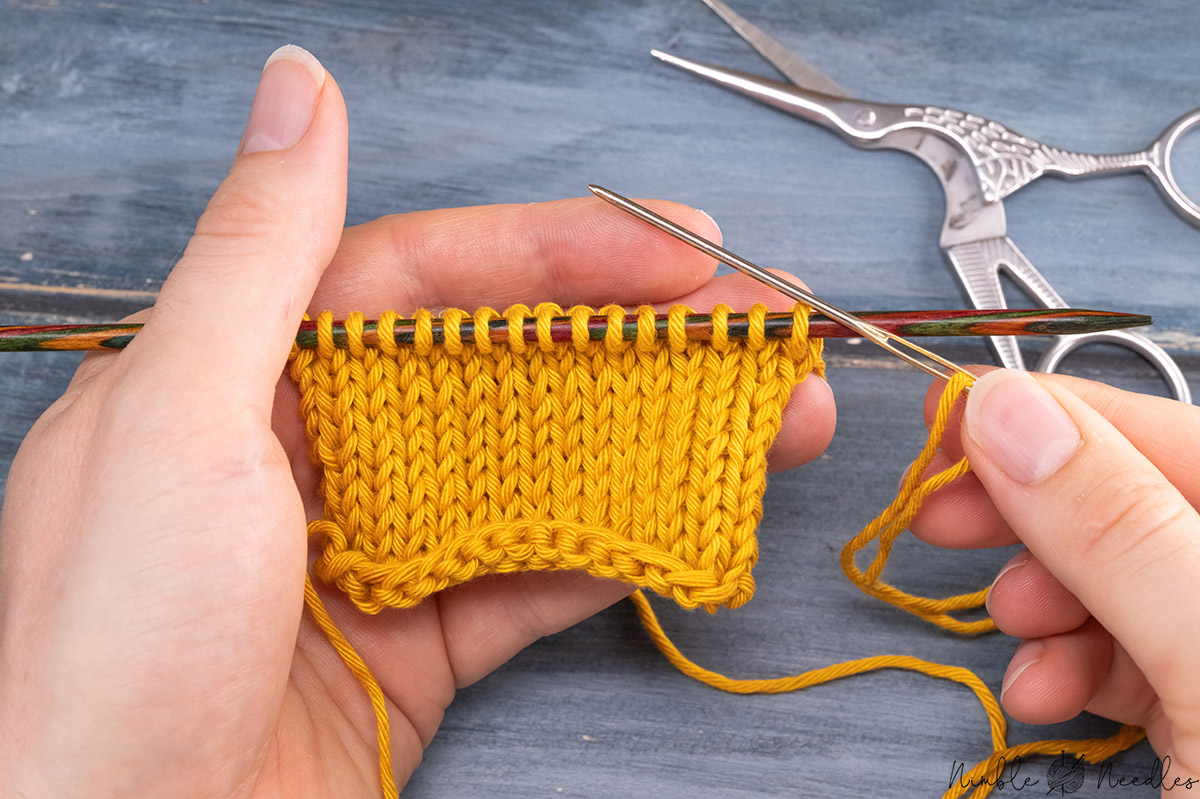
- Go through the SECOND stitch on your needle knitwise (so from left to right).

- Pull the yarn all the way through and pull tight.
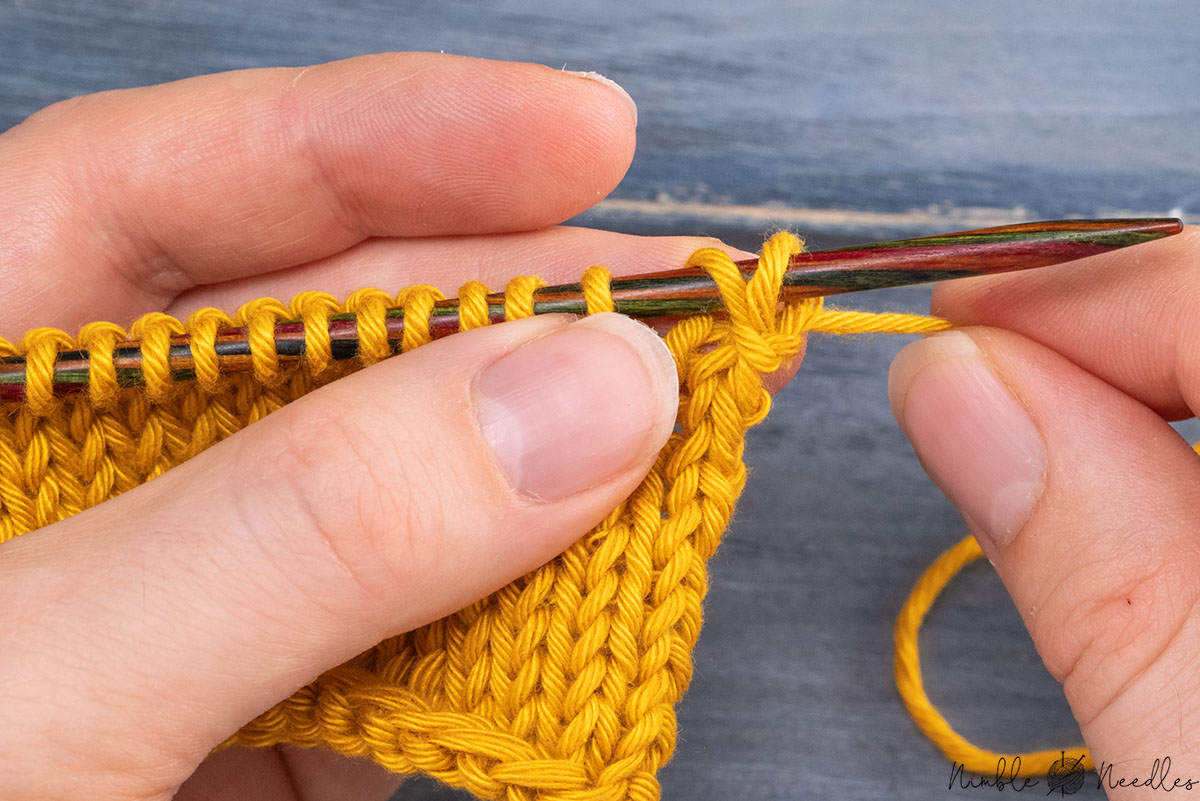
- Next, go through the first stitch on your needle purlwise (so from right to left).
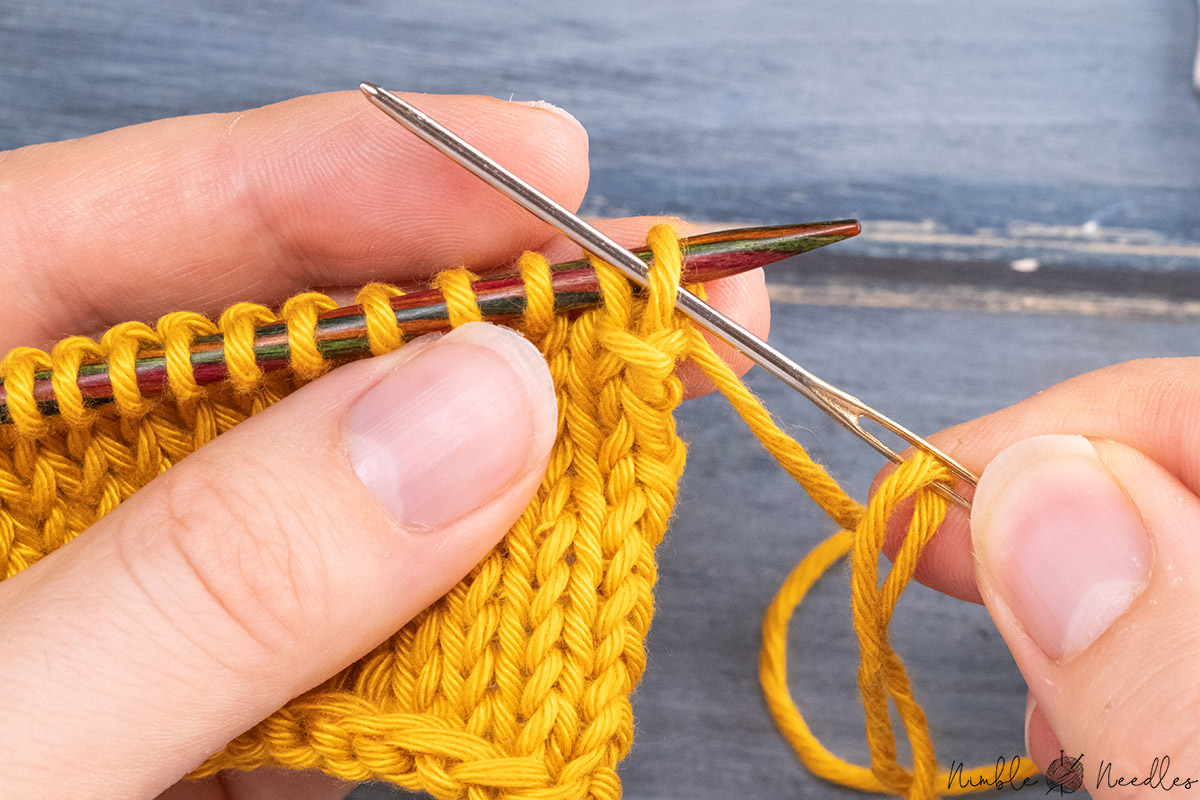
- Again, go all the way through and pull tight.
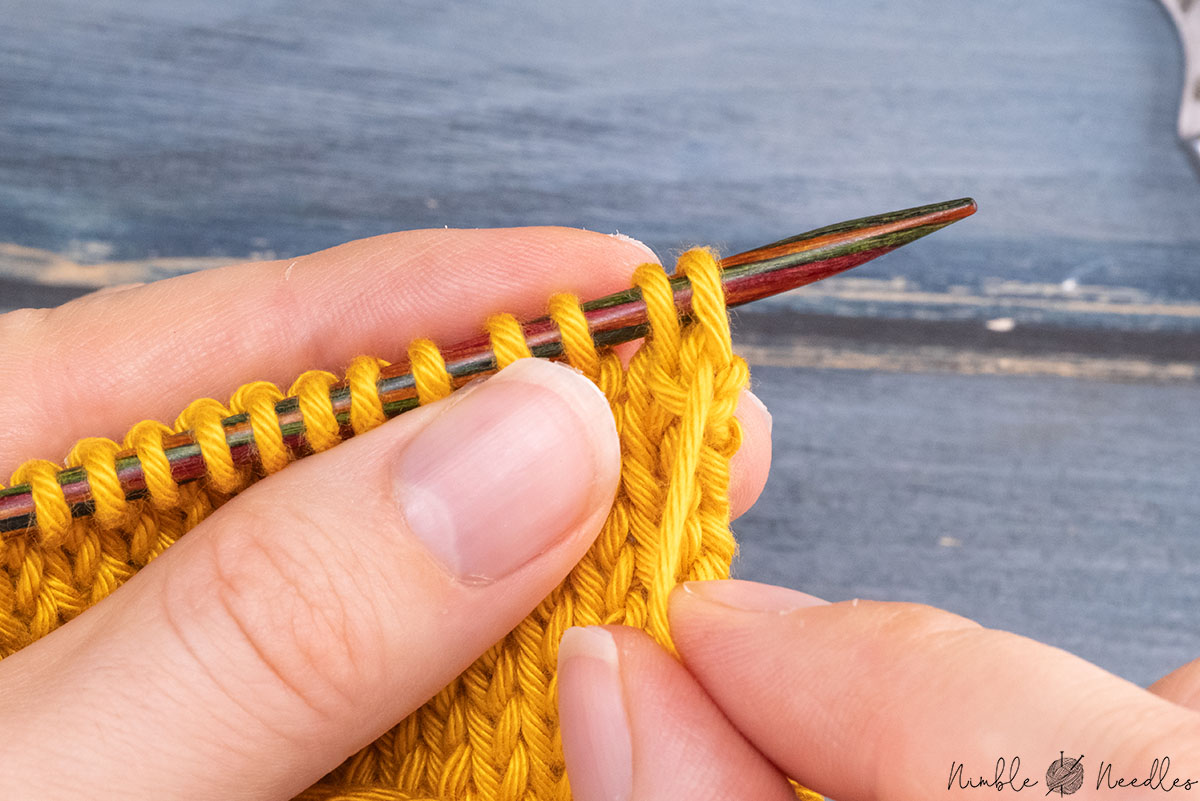
- Drop the first stitch off the needle.
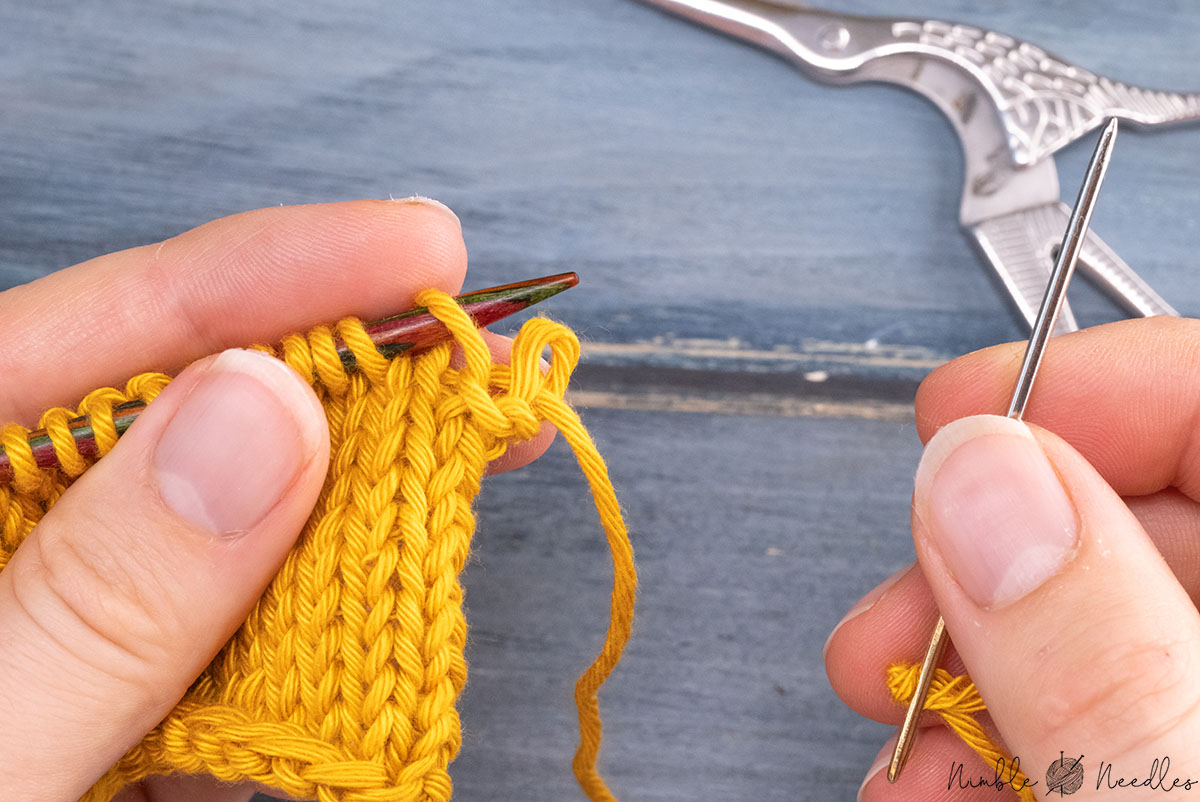
- Go through the new second stitch knitwise and pull tight.
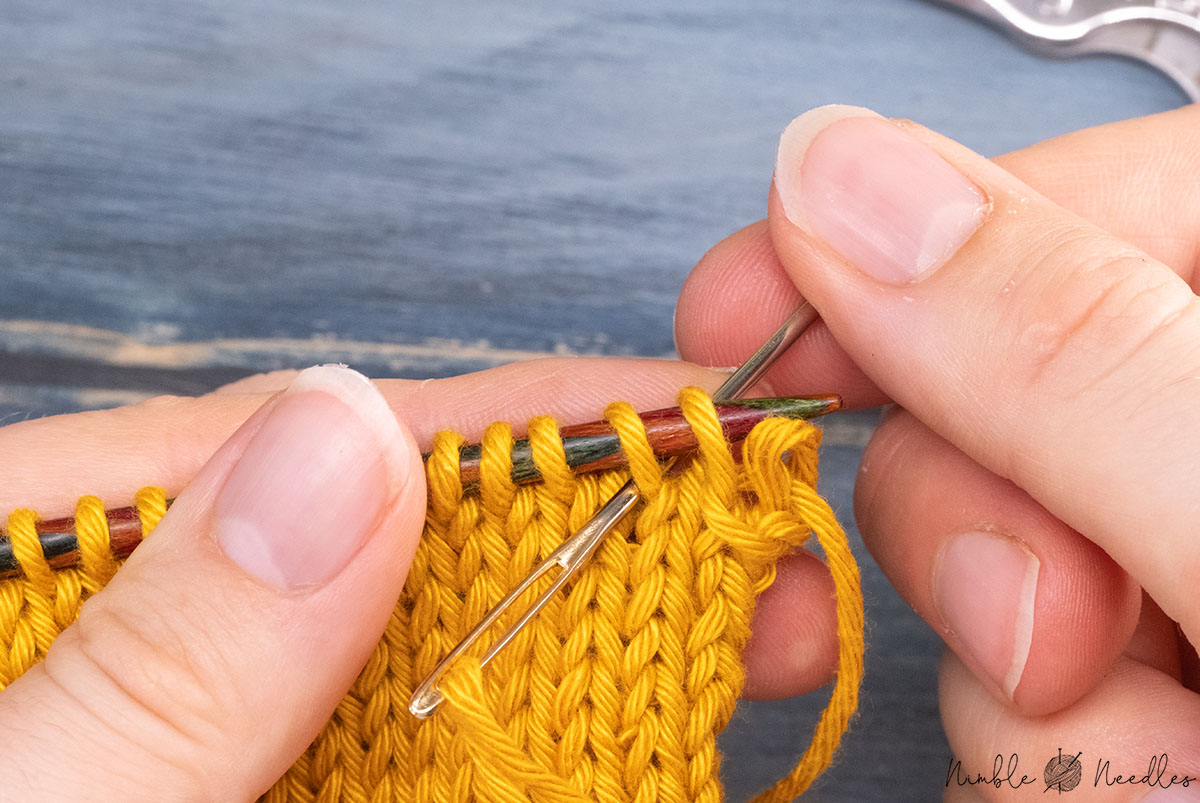
- Go through the first stitch purlwise.
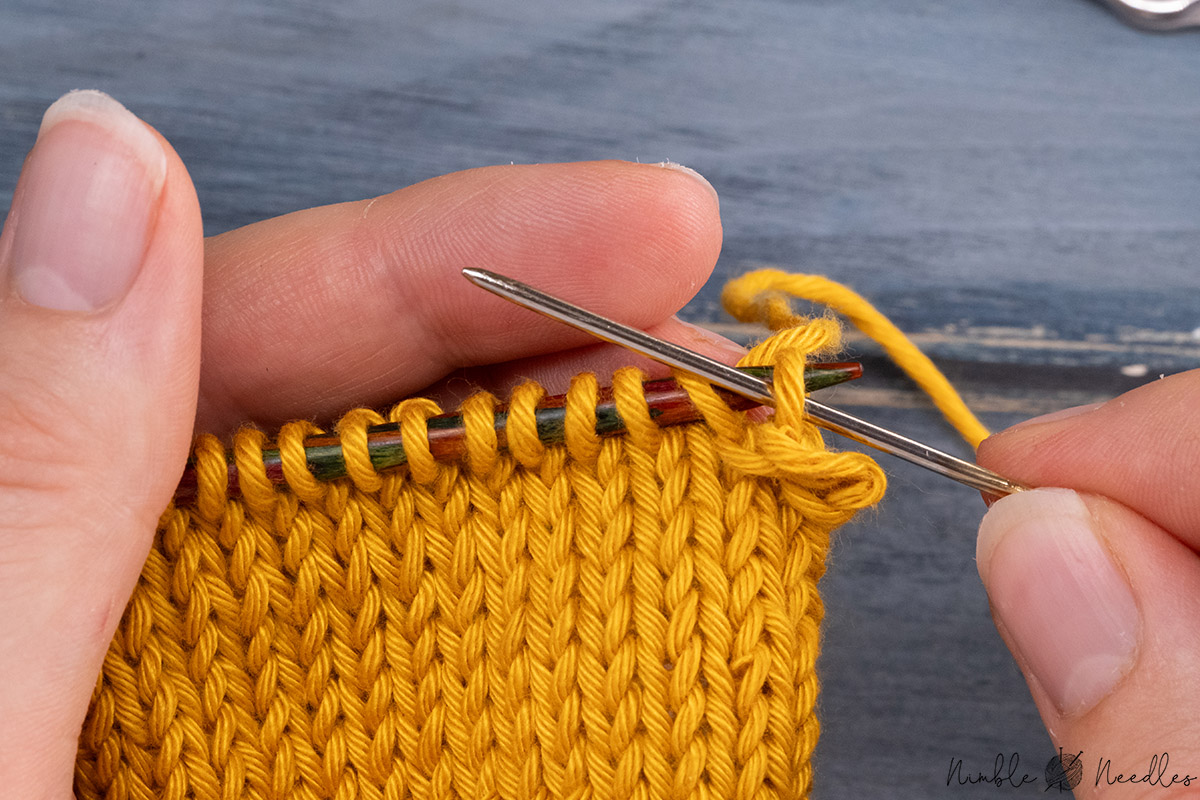
- Pull tight and drop this first stitch off the needle.
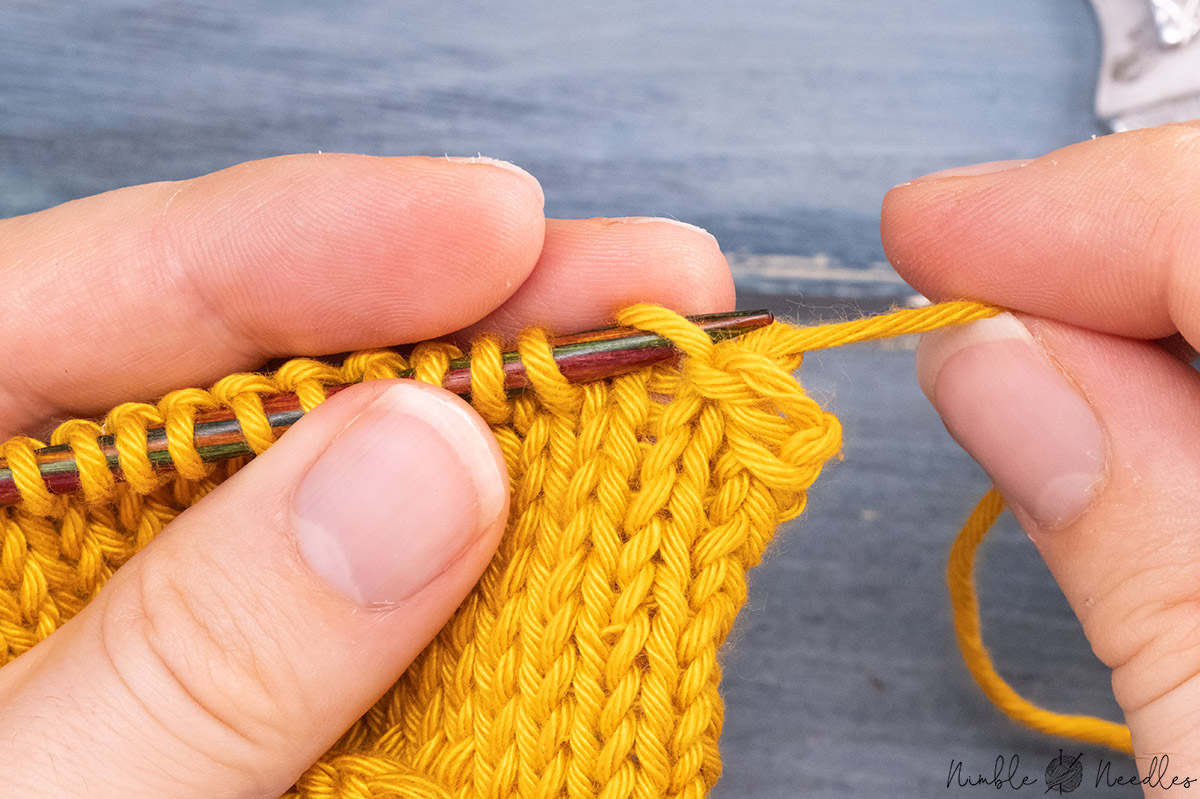
- Repeat steps 7-8 over and over again until you come to the end of your. Go through the last stitch from behind and drop it off as before.
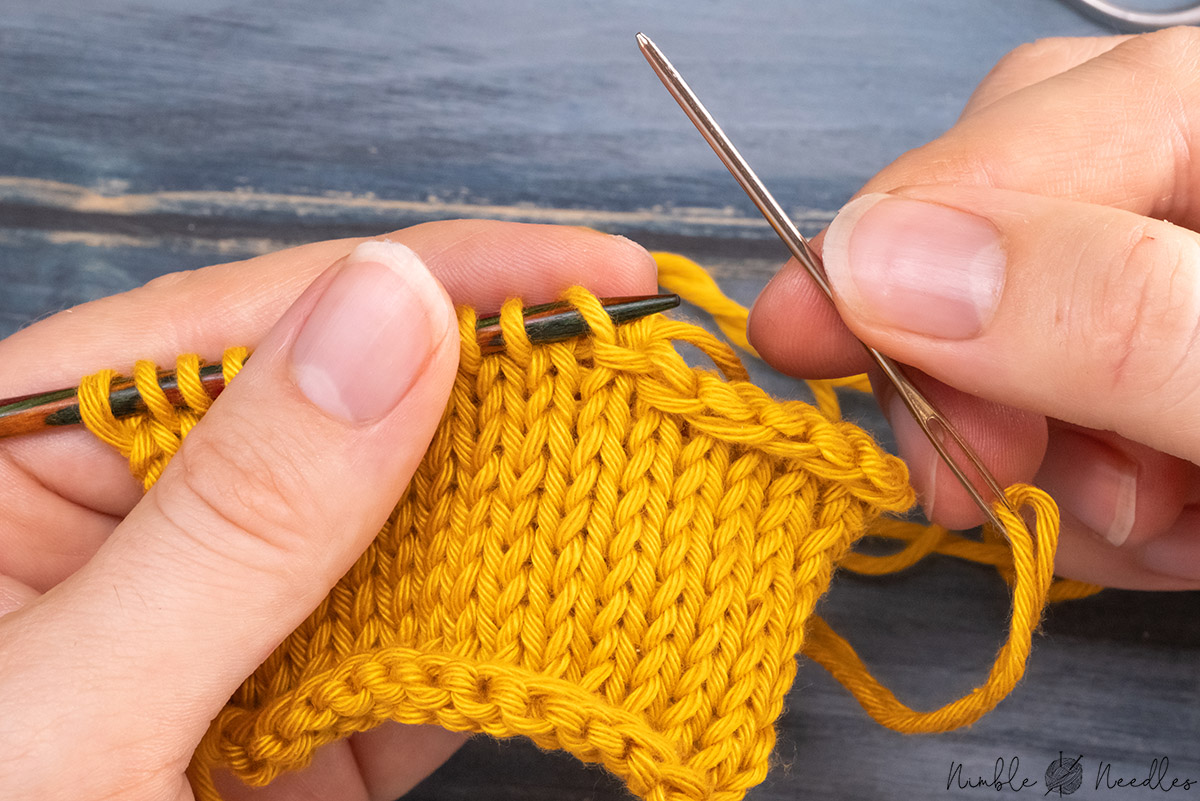
Please be aware that any sewn edge will depend on your ability to maintain an even tension. The tighter you pull, the tighter your edge will be. As a result, I urge you to check your tension after a couple of stitches and see if it matches your cast-on edge.
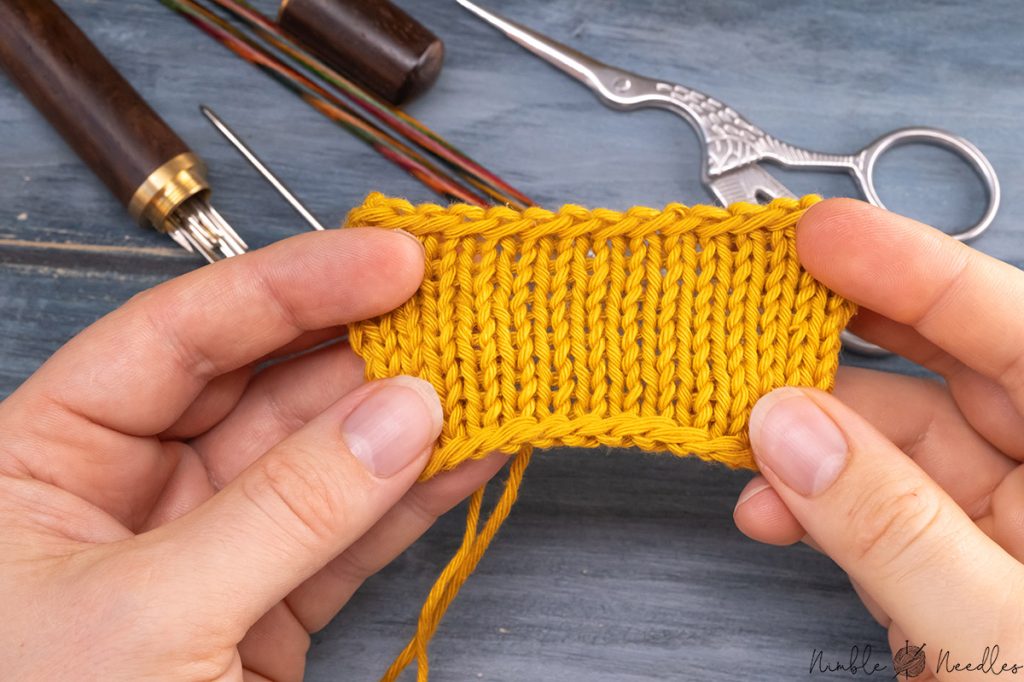
Please be aware that, just like the corresponding cast-on, the sewn longtail bind-off is only moderately stretchy. It’s great for simple scarves, cowls, and the like, but I wouldn’t use it for any project that relies on negative ease.
Anyway, that was my tutorial on the sewn longtail bind-off. Comment below with your questions
Really nice bind off! Looks lovely!